Our network consists of eight academic partners: University of Eastern Finland, Aalto University, University of Helsinki, Finnish Meteorological Institute, University of Jyväskylä, LUT University, University of Oulu, and Tampere University, and collaborators such as companies, hospitals, and research institutes.
Director: Professor Tanja Tarvainen (University of Eastern Finland)
Vice directors: Professor Nuutti Hyvönen (Aalto University) and Professor Samuli Siltanen (University of Helsinki)
Coordinators: Siiri Utriainen (University of Eastern Finland) and Mikko Helenius (Aalto University)
Steering group: Dean Sami Hyrynsalmi (LUT University), Dean Maarit Järvenpää (University of Oulu), Dean Pauliina Ilmonen (Aalto University), Dean Kari Lehtinen (University of Eastern Finland), Director Jouni Pulliainen (Space and Earth Observation Centre, Finnish Meteorological Institute), Dean Timo Sajavaara (University of Jyväskylä), Dean Sasu Tarkoma (University of Helsinki), and Vice rector Tapio Visakorpi (Tampere University)
Scientific Advisory Board: Chief Research Scientist Marie Rognes (Simula Research Laboratory, Oslo) and Professor Otmar Scherzer (University of Vienna)
Stakeholder Advisory Committee: Head of Research and Technology Samuli Laukkanen (Products & Systems, Vaisala), Head of Software and Algorithm Development Mikko Lilja (Planmed), CEO Mikko Myllykoski (Heureka), Manager Jussi Puura (Disruptive Technologies and Future Visions, Sandvik), and Director Leena Pöntynen (Skills and competence, Technology Industries of Finland)
Partners

The purpose of Aalto University is to shape a sustainable future and make breakthroughs in and across science, art, technology, and business. Aalto is represented in FAME by the Department of Mathematics and Systems Analysis and the Department of Neuroscience and Biomedical Engineering at the Aalto School of Science.
The FAME Principal Investigators at Aalto University specialize in neurosciences and medical imaging, including magnetoencephalography, diffuse optical tomography and electrical impedance tomography, as well as in applied inverse problems, numerical analysis, uncertainty quantification, and scientific computing.
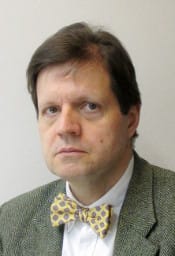
Professor Hyvönen defended his doctoral thesis Diffusive Tomography Methods: Special Boundary Conditions and Characterization of Inclusions at the Helsinki University of Technology in 2004. In 2012, he was appointed as a tenured associate professor in applied mathematics at the Department of Mathematics and Systems Analysis of Aalto University, where he has been a full professor since 2017 and served as the head of the department for 2018–2025. Hyvönen specializes in inverse boundary value problems for partial differential equations together with the related imaging modalities. He studies theoretical, computational, and statistical aspects of inverse problems, and has supervised ten doctoral theses and co-authored more than 75 articles in international scientific journals. As a member of the FAME Flagship, Hyvönen is looking forward to widening his research scope and impacting the society via collaboration with stakeholders.

Hanna Renvall defended her doctoral thesis in medicine in 2004 and graduated as a Master of Science (Technology) in engineering physics in 2010. She was appointed in 2021 to the first joint professorship in translational neuroimaging between Aalto University and Helsinki University Hospital (HUS). She also serves as the Scientific Director of the functional neuromaging (BioMag) at HUS.
Renvall is an expert in functional neuroimaging, particularly magnetoencephalography (MEG), and has over ten years of experience as a clinical neurologist. Her research focuses on computational modelling and advanced analysis of neuroimaging data, especially in clinical populations such as traumatic brain injury and neurodegenerative diseases. She has extensive experience as PI and co-PI in major national and international research projects, including EU, Business Finland, and Research Council of Finland.

Philine Schiewe is an assistant professor for Operations Research at Aalto University since 2022. She received her PhD in mathematics in 2018 from the University of Göttingen and has been a postdoctoral researcher at Technical University Kaiserslautern. Her work focuses on combinatorial and mixed-integer optimization, including the design and analysis of algorithms, with applications in transportation and urban logistics. Here, a crucial aspect is the integrated optimization of sequential processes, where a larger solution space leads to both better overall solutions and more intricate problems. Furthermore, Philine Schiewe is the head of the open-source software project LinTim (https://lintim.net) which offers data sets, algorithms and benchmarking opportunities for various planning stages in public transportation.
Photo: Aalto University/Linda Lehtovirta (cropped from the original


The Finnish Meteorological Institute (FMI) conducts internationally high-quality science, the results of which are applied in society. FMI produce researched and verified information to support decision-making. In addition to measurements, FMI’s work involves the use of scientific calculation models that make use of supercomputers.
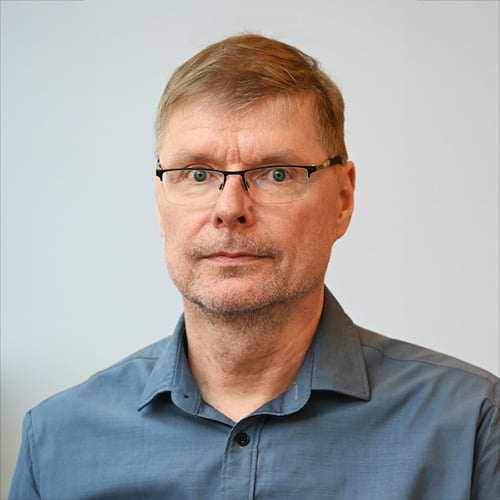
Marko Laine completed his doctoral degree at LUT University on adaptive MCMC methods for statistical analysis of environmental models. His main research areas include statistical methods in geophysical sciences, statistical post-processing for numerical weather prediction, data assimilation, and data fusion. He is currently a Research Professor and a group leader of the Meteorological Research Applications group at the Finnish Meteorological Institute (FMI).
The FAME Flagship continues the fruitful collaboration that FMI has conducted with the involved universities. In weather and climate research, a strong foundation in physical expertise, combined with advanced computational, numerical, and statistical methods, is essential. FAME will further enhance the visibility and impact of the research and its results across various sectors of society.

Anders Lindfors completed his doctoral degree at the University of Helsinki in 2008 on reconstruction of past UV radiation. Since then, his main research areas focus on energy meteorology and numerical weather prediction. Currently, Lindfors holds the positions of Research Professor and Head of Unit of Meteorological Research at the Finnish Meteorological Institute. At FAME, Lindfors aims to pursue impactful research at the intersection of energy meteorology and mathematics. For example, focusing on subjects such as ensemble forecasting and predictability of wind and solar power is relevant for various applications relating to the green energy transition.

Johanna Tamminen defended her applied mathematics dissertation Adaptive Markov chain Monte Carlo methods and uncertainty quantification in satellite remote sensing at the University of Helsinki in 2004. Ever since, the satellite remote sensing has remained her key area of interest. In her research she has developed Bayesian methods and uncertainty quantification for computational inverse problems rising in satellite remote sensing of atmospheric composition, including air quality, greenhouse gases and emission estimation. Since 2018 she has hold the research professor position in atmospheric remote sensing at the Finnish Meteorological Institute (FMI) and, currently, she is also the head of Earth Observation Research Unit at the Space and Earth Observation Centre of FMI. As a member of FAME, Tamminen is looking forward for novel method development, breakthroughs in uncertainty quantification and AI, and inspiring collaboration with industry, authorities and decision-makers.
Photo: Oscar Lindell


LUT University brings together the fields of business, technology, and social sciences. The strategic choices, scientific research, academic education, and social interaction are all guided by the principles of ecological, economic, and social sustainability. Clean energy, water, and air are life-giving resources for which LUT seeks new solutions with its expertise in technology, business, and social sciences. LUT helps society and businesses in their sustainable renewal.
- Emilia Blåsten
- Heikki Haario
- Tapio Helin
- Jari Hämäläinen
- Vesa Kaarnioja
- Toni Karvonen
- Jesse Railo
- Satu-Pia Reinikainen
- Lassi Roininen
Emilia’s area of research is on partial differential equations, especially on inverse problems related to networks and scattering theory. She’s an associate professor at LUT University and completed her PhD on applied analysis at the University of Helsinki in 2013. After that, she spent three years as a postdoctoral fellow at the HKUST Jockey Club Institute for Advanced Study in Hong Kong. In the context of the FAME Flagship, she is looking forward to making a lot of interdisciplinary research and starting new collaborations for the good of humanity!

Tapio Helin earned a Doctor of Science (Engineering) degree from Aalto University in 2010 on Bayesian inverse problems. His current research focuses on Bayesian inference, inverse problems, and experimental design. Helin is a tenured Full Professor at LUT University. As part of the FAME Flagship initiative, he is dedicated to forging connections between applied mathematics and industry, coordinating the research program R3 on Uncertainty quantification and machine learning.

Vesa Kaarnioja completed his doctorate in mathematics at Aalto University in 2017. He is currently an associate professor in applied mathematics at LUT University in Lappeenranta. Previously, he worked as a researcher at the Freie Universität Berlin (Free University of Berlin), the UNSW, and as a substitute professor at the University of Potsdam. His research interests include high-dimensional numerical integration, uncertainty quantification, and Bayesian inference. As part of the FAME Flagship, he aims to develop the mathematical analysis of high-dimensional numerical methods with particular applications in computational statistics, partial differential equations, and inverse problems.

Jesse Railo is an associate professor in applied mathematics at LUT University in Lappeenranta. He completed a Ph.D. degree with distinction at the University of Jyväskylä in 2019 and was the recipient of the Finnish Inverse Prize of 2020 for his doctoral thesis “Geodesic tomography problems on Riemannian manifolds”. Before returning back to Finland in 2023, he held postdoctoral positions at the Seminar for Applied Mathematics, ETH Zürich, and the Department of Pure Mathematics and Mathematical Statistics, University of Cambridge. Railo completed his undergraduate studies at the University of Tampere in 2014 and was a visiting student at the University of Sheffield in 2011–2012. Railo specializes to the theory of mathematical models appearing in imaging sciences. His work often utilizes methods from harmonic analysis, partial differential equations and differential geometry. In the FAME Flagship, Railo will communicate research and mathematics to public audience and contribute to the mathematical foundations of inverse problems. He is also looking forward to start new research projects related to uncertainty quantification and application areas of inverse problems.

Lassi Roininen is Professor of Applied Mathematics in Lappeenranta, a position he has held since September 2022, before which he was Associate Professor of Applied Mathematics at Lappeenranta from 2018-2022. Roininen holds MSc in mathematics from Tampere University of Technology. He completed his PhD in applied mathematics at the University of Oulu in 2015. The work was carried out at the Sodankylä Geophysical Observatory, an independent research department of the University of Oulu. After that, he was a postdoctoral researcher in the Department of Mathematics at Tallinn University of Technology, the Department of Statistics at the University of Warwick, the Department of Mathematics at Imperial College London, and then an Academy of Finland postdoctoral researcher at the University of Oulu. Roininen is also a Docent of applied mathematics at the University of Oulu, Adjunct Associate Professor at Bahir Dar University (Ethiopia) and affiliated AIMS (African Institute for Mathematical Sciences, Rwanda) Faculty member. Within the FAME Flagship, Prof. Roininen contributes to computational statistics and Bayesian inversion research projects with applications in geosciences and industry, and in impact projects in capacity building of the African universities.


Tampere University is one of the most multidisciplinary universities in Finland. It brings together research and education in technology, health and society. The University is known for its excellence in teaching and research and it collaborates with hundreds of universities and organisations worldwide. Its community consists of 21,000 students and over 4,000 staff members from more than 80 countries.
Professor Jari Hyttinen is a full professor at Faculty of Medicine and Health Technology (MET) at Tampere University. He received his MSc and PhD from Tampere University of Technology 1986 and 1994, respectively. PhD Prof Hyttinen has been visiting researcher at the University of Pennsylvania PA USA, University of Tasmania Australia, Duke University, NC USA. He has acted as a visiting professor at University of Wollongong, Australia 2017 and ETH Zurich Switzerland 2018. In his PhD thesis prof Hyttinen developed computer model of the heart and thorax to simulate ischemia and changes of ECG voltages. Professor Jari Hyttinen laboratory, the Computational Biophysics and Imaging Group, develops novel computer simulations (in-silico) on cellular biophysics, body–on-chip technologies and in-vitro 3D imaging methods for future personalized medicine.
As Prof Hyttinen’s sees it, the FAME Flagship provides an excellent platform for collaboration in Finland on merging development of mathematical principles with applications such as imaging, which has potential to strengthen the collaboration with industry and other stakeholders, thus generating new joint funding schemes.

Prof. Sampsa Pursiainen is a Professor of Applied Mathematics at Tampere University (TAU), Finland. He specializes in inverse problems of life and geosciences. He has recently focused on developing advanced mathematical methods for EEG/MEG source localization and neuroimaging, with applications in neuroscience and clinical diagnostics, as well as for tomographic radar imaging, with applications in asteroid research and planetary science. Prof. Pursiainen leads a research team within the FAME Flagship and aims to facilitate groundbreaking advances in mathematical methodologies that bridge theory and practical applications.

Pasi Raumonen completed his Doctor of Science degree in Tampere University of Technology in 2009. The subject of his doctoral thesis was formulation of electromagnetic boundary value problems with differential geometry and the utilisation of continuous symmetries for the dimensional reduction as well as the formulation of equivalent problems with different metric structure for easing numerical solutions. Currently, Raumonen works as an Associate Professor of applied mathematics in Computing Sciences unit at Tampere University. His main research area is applied mathematics for ecology, forest science and forest measurement. His research focuses on developing methods to model complex natural structures and surfaces, such as tree and forest structures, from close range remote sensing data such as lidar and photogrammetric point clouds. The main expectations from the FAME Flagship are new collaborations and new applications, especially with industry.


The University of Eastern Finland is the most multidisciplinary university in Finland. Its high standard of interdisciplinary research and education respond to global challenges and build a sustainable future. Its research is ranked among the best in the world in several fields. UEF offers education in nearly 100 major subjects and it trains experts for tomorrow’s changing labour market needs.
- Olli Gröhn
- Jari Kaipio
- Mikko Karttunen
- Mikko Kettunen
- Ville Kolehmainen
- Timo Lähivaara
- Mikko Nissi
- Alejandra Sierra Lopez
- Tanja Tarvainen
- Jussi Tohka
- Aku Ursin
- Marko Vauhkonen
Olli Gröhn is a Professor of Biomedical Imaging and Director of the Biomedical Imaging Unit, a national and European research infrastructure for preclinical MRI. He completed his PhD in Biomedical MRI at the University of Kuopio in May 2000, followed by postdoctoral training at the Center for Magnetic Resonance Research, University of Minnesota, from 2000 to 2002. His research focuses on the development of novel MRI methodologies and their application to neurological diseases. He has authored more than 220 original scientific publications in this field. His recent work concentrates on the development of advanced fMRI methods, particularly zero echo time (ZTE) fMRI, a quiet and artifact-free approach to functional imaging that does not rely on BOLD contrast.

Professor Jari Kaipio graduated with PhD in Physics in 1996. He acted as the head of the Department of Applied Physics, University of Kuopio, between 1997 – 2008 and currently acts as the head of Department of Technical Physics, University of Eastern Finland since 2021. In 2009-2021, he was Professor of Applied Mathematics in University of Auckland, New Zealand. His research focuses on realistic physical modelling and, in particular, uncertainty quantification in inverse problems. Within FAME, his main focus is in challenging measurement problems and the related optimal control.

Dr. Mikko Karttunen is a Professor of Computational Engineering/Physics at the University of Eastern Finland in Kuopio and a Principal Investigator at the ELLIS (European Laboratory for Learning and Intelligent Systems) Institute in Finland at Espoo. He obtained his Ph.D. in Condensed Matter Physics from McGill University in Montreal (1999) and an M.Sc. from Tampere University of Technology (1993) . After his PhD, he moved to a postdoctoral research fellowship at the Max Planck Institute for Polymer Research in Mainz, followed by becoming a Group Leader at the Laboratory of Computational Engineering and Academy of Finland Research Fellow at Helsinki University of Technology (now Aalto University). He moved to the current position from Western University in London, Canada, where he was a Professor of Physics and Chemistry, and Tier 1 Canada Research Chair in Computational Materials and Biomaterials Research. Prior to Western, he was a Professor of Chemistry and a Member of the Waterloo Institute for Nanotechnology at the University of Waterloo in Canada, and a Professor and Chair of Mathematics of Complex Systems at the Department of Mathematics and Computer Science at Eindhoven University of Technology in the Netherlands. His research is characterized by the development and use of large-scale, high-performance computer simulations, and the development and application of artificial intelligence and machine learning techniques. His research program integrates such computational methods especially with biological, pharmaceutical and materials sciences.

Mikko Kettunen completed his doctoral degree in the University of Kuopio on magnetic resonance imaging. He works currently as a Research director at the University of Eastern Finland’s Faculty of Health Sciences. His main research interest is in magnetic resonance imaging, in particular metabolic magnetic resonance imaging and pulse sequence development. Medical imaging requires increasingly sophisticated data analysis techniques and, therefore, forms a perfect application area for the computational methods developed within FAME.

Ville Kolehmainen completed his Ph.D. degree at the University of Kuopio in 2001 on Bayesian inverse problem methods for tomography imaging. In 2016 he was appointed as a Professor of Computational Physics at the University of Eastern Finland. His research focuses on mathematical and statistical models and computational methods for inverse imaging problems with applications ranging from medical imaging to satellite based remote sensing of the atmosphere. He has co-authored more than 110 journal articles and supervised 17 PhD thesis. As a member of the FAME Flagship, he is looking to widening collaborations with industrial and institutional stakeholders.

Timo Lähivaara completed his doctoral degree at the University of Eastern Finland, Kuopio, Finland, in 2010, with a dissertation titled “Discontinuous Galerkin method for time-domain wave problems.” He is currently a Research Director at the Department of Technical Physics, University of Eastern Finland. Lähivaara’s expertise lies in utilizing high-performance computing to address wave-dominated inverse problems, with a keen interest in applications like monitoring groundwater resources using seismic data and estimating the shape of scatterers using electromagnetic waves. Lähivaara looks forward to the opportunities for collaboration with companies facilitated by the FAME Flagship.

Mikko Nissi received his doctoral degree from the University of Kuopio in 2008 on quantitative magnetic resonance imaging of articular cartilage. After graduation he worked as a Research Associate in the Center for Magnetic Resonance Research at the University of Minnesota and as an Academy Research Fellow and Associate Professor in the University of Eastern Finland. Currently he is a Professor of Medical Physics and Engineering, especially magnetic resonance imaging in the University of Eastern Finland. His research interests include MR relaxometry methods, such as various rotating and laboratory frame relaxation methods and quantitative susceptibility mapping as well as image acquisition and reconstruction strategies, targeting particularly musculoskeletal applications. Magnetic resonance imaging (MRI) forms a perfect application area for various advanced computational methods, which are at the core of the FAME Flagship, and he wishes to foster new collaborations within the flagship to advance the possibilities of MRI.

Alejandra Sierra completed her doctoral degree in Biochemistry at the Autonomous University of Madrid, Spain in 2006. The topic of her doctoral thesis was the analysis of glutamate and glutamine exchange between the cytosol and the mitochondria in neurons and astrocytes in vitro and in vivo, using (13C, 2H) NMR spectroscopy. After her PhD, she stablished herself in Kuopio, Finland, where she is now a research director in the A.I. Virtanen Institute for Molecular Sciences and leads the Multiscale Imaging Group. She is one of the leading experts in characterization and validation of MRI. Over the past 15 years, she has developed multidisciplinary research in the interface of neuroscience, physic, mathematics, and computational sciences. Her team performs in vivo and ex vivo MRI experiments on animal models of disease and histology on the same animals, and also, in human studies. She is interested in cutting-edge and emerging MRI methodology, such as multidimensional MRI and 3D microscopic techniques, such as confocal and 3D-eletron microscopy. Knowing what the signal means in terms of tissue properties, MRI can improve its detection of brain alterations and, in turn, that information can push forward MRI development. In FAME’s context, Dr Sierra seeks to develop solutions for characterizing the MRI voxel in terms of microstructure and mathematical quantitative tools to extract tissue metrics and predictive methods for a better correlation with MRI techniques.

Tanja Tarvainen completed her doctoral degree in the University of Kuopio in 2006 on modelling light transport in biological tissues. After graduation, she has worked as a research associate in the University College London and Academy Research Fellow and Associate Professor in the University of Eastern Finland. Currently, she is a Professor of Computational Imaging and Modelling in the University of Eastern Finland. Her research interests include computational and Bayesian inverse problems, uncertainty quantification, and radiative transfer. She is especially interested in tomography using light and coupled physics, such as photoacoustic, and she received an ERC-CoG 2020 for her research on quantitative coupled physics tomography. She is the director of the FAME Flagship.

Jussi Tohka is a Full Professor of Biomedical Image Analysis and head of Biomedical Image Analysis Group at A.I. Virtanen Institute for Molecular Sciences of University of Eastern Finland. His research focuses on developing new methods to analyze imaging data and developing machine learning approaches for predicting the course of brain diseases at individual level. He received his PhD degree (with commendation) in Signal Processing from the Tampere University of Technology, Finland, in 2003. Within FAME, he is seeking to translate advanced mathematical and computational methods into medical image analysis.

Aku Ursin received the M.Sc. and Ph.D. degrees from the University of Kuopio, Finland, in 2000 and 2006, respectively. He is a Professor at the Department of Technical Physics, University of Eastern Finland. He has authored over 70 journal articles, about 40 conference papers and three book chapters, and supervised 9 Ph.D theses. His current research interests include statistical and computational inverse problems, tomographic imaging, greenhouse gas monitoring and data analysis of atmospheric aerosol processes. Within the FAME flagship, he looks forward to fostering the collaboration both with the academic partners and industry, especially aiming at environmentally sustainable development. He is also contributing to the societal outreach theme of FAME, seeking new ways to promote mathematics, physics, and engineering to younger generations.

Marko Vauhkonen received his PhD (“Electrical impedance tomography and prior information”) in physics in 1997 at the University of Kuopio, Finland. After graduation, he worked as a researcher and research director at the same university, until moving to Germany in 2006. There he worked as a Marie-Curie Research Fellow for two years at the Philips Research GmbH, Aachen. During 2008–2009 Vauhkonen worked as a CTO in a spin-off company Numcore Ltd. until starting in his current position as a professor at the University of Kuopio (currently University of Eastern Finland), Department of Applied Physics (currently Department of Technical Physics), in 2009. His research interests include inverse problems, time-varying reconstruction, process tomography and medical imaging such as PET, SPECT and MRI. He has published more than 120 scientific journal articles. In FAME, there is a focus on fostering closer collaboration with the stakeholders of the flagship, particularly with the companies involved in the FAME projects.


The University of Helsinki is Finland’s largest and oldest academic institution and an innovative centre of science and thinking. Since 1640, it has contributed to the establishment of a fair and equal society that is considered one of the best in the world. Today, its multidisciplinary academic community solves problems that affects all – with the power of knowledge, for the world.
Peter Dendooven defended his doctoral thesis Reflection asymmetry in the actinide region: Alpha-decay studies with the ion guide technique on experimental nuclear physics at KU Leuven, Belgium, in 1992. The common thread across Peter’s research is gamma ray imaging/tomography, and its application to nuclear safety/security/safeguards and radiotherapy. He is working on passive gamma emission tomography of spent nuclear fuel, aiming to improve the image reconstruction techniques and investigating the usefulness of position-sensitive semiconductor detectors. Currently, Peter holds the positions of Visiting Professor at the Helsinki Institute of Physics, University of Helsinki, Finland, and Associate Professor at the Particle Therapy Research Center and Department of Radiation Oncology, University Medical Center Groningen, the Netherlands. Being part of FAME anchors his research firmly in the Finnish applied mathematics community, facilitating contacts with stakeholders and commercial partners to help translate his research to society and helping to ensure the continuing and long-term success of imaging research and applications in Finland.

Professor Gregor Hillers completed his doctoral degree in Geophysics at ETH Zürich, Switzerland, in 2005. In his thesis “On the Origin of Complexity in Continuum Fault Models With Rate and State Friction” he used numerical models of an earthquake fault to analyze the effect of various physical fault zone properties on the synthetic seismicity patterns, in comparison to observed earthquake complexities. Prof Hillers’ main research areas include seismology, array seismology, passive or noise-based seismic imaging and monitoring, and earthquake physics and scaling relations. He currently holds the position of Professor in Seismology at the University of Helsinki’s Institute of Seismology at the Department of Geosciences and Geography. He has been managing the mobile Finnish Seismic Instrument Pool FINNSIP. In FAME, Prof Hillers expands his research and collaboration network in Finland to enhance subsurface imaging and monitoring techniques. Two FAME related DREAM PhD candidates support this integration.

Samuli Siltanen completed his doctoral degree in the Helsinki University of Technology on electrical impedance tomography. He works currently as a Professor of Industrial Mathematics and Vice Dean at the University of Helsinki’s Faculty of Science. His main research interest is in medical imaging, including X-ray tomography and electrical impedance tomography. However, computational methods designed in his team find applications widely, for example in filtering photographs and checking spent nuclear fuel, and industrial partners of FAME offer new and exciting possibilities. Siltanen is an enthusiastic science communicator in national TV, literature, and social media. This activity is well aligned with FAME, whose central goal is to illustrate the wonders of science for children and grown-ups alike.

Professor Tuuli Toivonen did her PhD at the University of Turku, graduating in 2006 with the title Landscape Information in Quantitative Biogeography – in search of a balance between resolution and extent. Since then, her research work has taken new directions. Her interdisciplinary research group the Digital Geography Lab studies spatial interactions between people and between people and their environments, mostly through fusion of user generated mobile big data and modelling. She hopes that the FAME collaborations will introduce new collaborations and advanced mathematical approaches for understanding better people’s spatial behaviour from sporadic spatio-temporal data.
Picture: Maarit Kytöharju


The University of Jyväskylä is a human-centered environment of 2,500 experts and 14,500 students, with the goal of creating wisdom and wellbeing for all. The research group in inverse problems at the Department of Mathematics and Statistics focuses its research on fundamental aspects of inverse problems related to medical and seismic imaging. The group also coordinates the training in areas related to FAME on a national level.
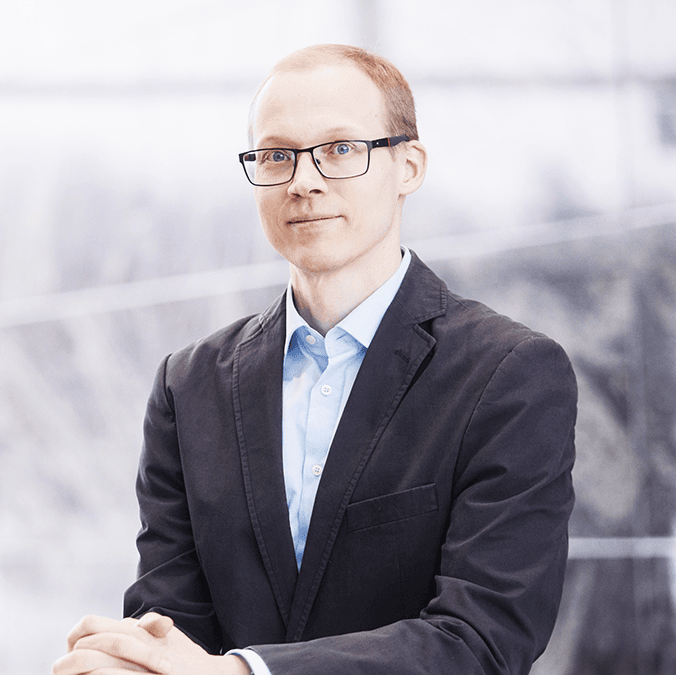
Joonas Ilmavirta specializes in the mathematical theory of inverse problems, particularly geometric modelling of wave phenomena and analysis of indirect measurements within the arising models. His background in both theoretical physics (BSc 2011, MSc 2012) and mathematics (PhD 2014) allows him to combine modern mathematical tools (e.g. differential and algebraic geometry, microlocal analysis, geodesic ray tomography) to physical phenomena (e.g. seismology, cosmology, field theory) and produce surprisingly powerful methods for imaging problems. His main role in FAME is to coordinate teaching and training, including organizing an annual inverse problems summer school at Jyväskylä.

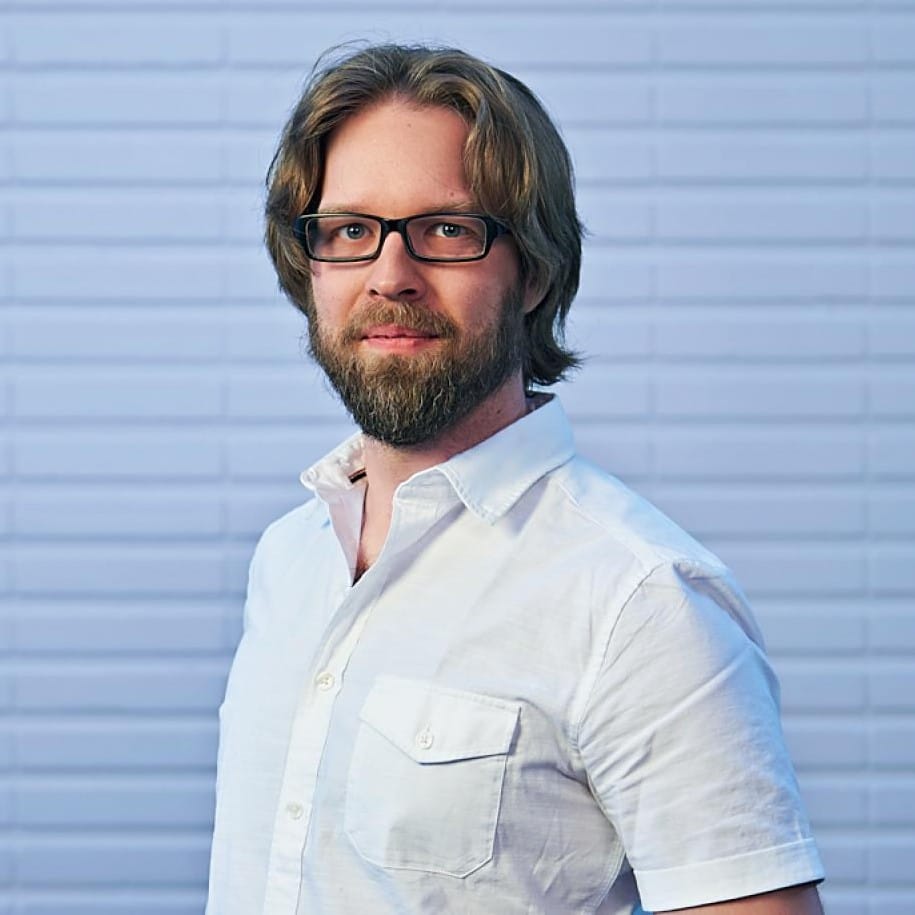
Mikko Salo received his PhD in applied mathematics in 2004 at the University of Helsinki. His main research areas are inverse problems for partial differential equations and geometric inverse problems. Currently he is a professor of mathematics at the University of Jyväskylä. In the FAME flagship he will focus on fundamental theoretical aspects of imaging problems and on coordinating the training given in areas related to FAME.


University of Oulu – Working for a more sustainable, more intelligent and more humane world.
The University of Oulu, founded in 1958, is one of the largest and most multidisciplinary universities in Finland with 8 faculties. It creates new knowledge and innovations that help to solve global challenges.
Andreas Hauptmann received his PhD in 2017 from the University of Helsinki in Applied Mathematics. He currently holds a position as Academy Research Fellow and Associate Professor (tenure track) of Computational Mathematics at the Research Unit of Mathematical Sciences, University of Oulu, and as Honorary Associate Professor at the Department of Computer Science, University College London. His research interest is in inverse problems and tomographic imaging, with a focus on combining model-based inversion techniques with data-driven methods and the study of their theoretical properties. Within FAME he expects to extend his collaboration between methodological and practical research with developments of advanced imaging methods for clinical use.

Miika T. Nieminen (born 1974) received his Ph.D. in 2002 in medical physics at University of Kuopio, Finland, on Quantitative Magnetic Resonance Imaging of Articular Cartilage: Structural, Compositional and Functional Characterization of Normal, Degraded and Engineered Tissue. He is Professor of Medical Physics at University of Oulu and Chief Physicist at Oulu University Hospital, Finland. He is vice-chair of the Research Unit of Health Sciences and Technology, University of Oulu, Finland. Formerly, he has conducted research also at Harvard University, USA. His principal research focus is on the development of medical imaging methods for tissue characterization, including the development of both quantitative magnetic resonance imaging methods and computed tomography methods using novel x-ray detectors and image reconstruction strategies. Under the FAME Flagship, he wishes to serve as an advocate to bring novel technologies close to the clinical end-users for the benefit of the patient.

Dr. Teemu Tyni defended his doctoral dissertation at University of Oulu on the topic of inverse scattering problems for certain biharmonic operators. Nowadays Teemu holds an assistant professor position at University of Oulu. His main research areas revolve around inverse problems in the broad sense with emphasis on partial differential equations and computational methods. Teemu strongly believes that FAME will bring forth groundbreaking new industrial and medical applications of inverse problems. Particularly exciting are future collaborations and work on new imaging methods with solid foundations in mathematical theory.

Collaborators