

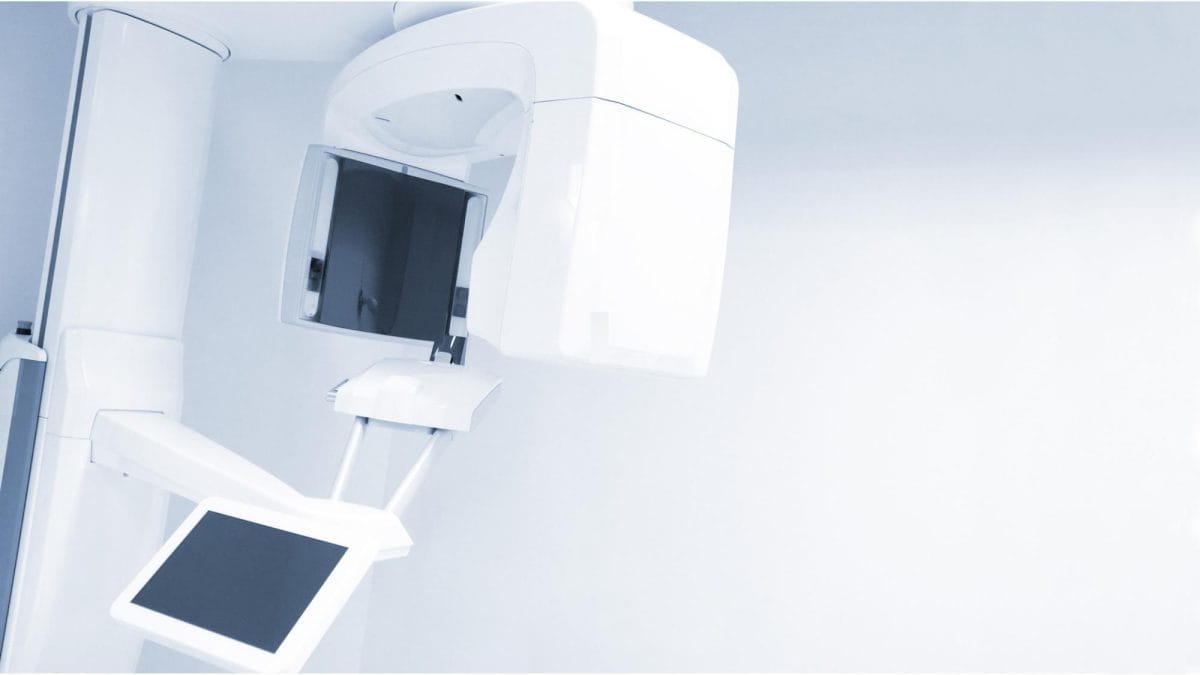
The Business Finland-funded co-innovation project TOMOHEAD set out to transform cone beam computed tomography (CBCT) imaging method into a modality capable of meeting clinical demands traditionally reserved for full computed tomography (CT). The three-year project (2023-2025) was funded as part of the Nokia Competitive Edge programme.
Active dialogue between the TOMOHEAD consortium’s academic and commercial partners facilitated deep and dynamic interactions between mathematicians, medical physicists, radiologists, hardware developers, and edge computing experts. Research teams from the Universities of Oulu and Helsinki were joined by Finland-based health technology manufacturer Planmeca Oy and X-ray solutions manufacturer Detection Technology Oyj. The project also included Nvidia Corp, MVision AI Oy, Disior Oy, Techila Technologies Oy, and the Wellbeing Services County of North Ostrobothnia (Pohde) as in-kind partners.
Guided by a deep academic-industrial collaboration, the consortium advanced CBCT imaging through three complementary strategies: novel detector technologies, cutting-edge reconstruction and image-error reduction algorithms, and a distributed edge-cloud computation platform for mobile imaging.
TOMOHEAD made significant advances in understanding and leveraging next-generation detector technologies:
- Comprehensive characterisation of X-ray detectors, development of novel calibration techniques, and validation of dual energy and spectral acquisition strategies on a clinical CBCT scanner demonstrated measurable improvements in soft tissue contrast and metal artifact suppression, paving the way for future CBCT systems.
- The development of advanced reconstruction algorithms with superior stability, interpretability, and noise texture provided key scientific insights for advanced image reconstruction methods. In addition, metal artifact reduction (MAR) methods were developed to produce accurate, computationally efficient, and experimentally validated 3D CBCT images.
- The development of a distributed edge-cloud platform enabling high-performance CBCT reconstruction outside the radiology department, and its integration with Planmeca’s reconstruction pipeline.
The collaboration between the University of Helsinki and University of Oulu’s research teams was rooted in Prof. Samuli Siltanen’s long history in developing tomographic image reconstruction algorithms and Prof. Miika Nieminen’s understanding of the clinical requirements and limitations. The project was coordinated by Mikael Brix, PhD, of University of Oulu. The Oulu-based Medical Imaging Teaching and Test Laboratory (MITTLAB) played an integral role in TOMOHEAD by facilitating the development of new hardware, reconstruction algorithms and methods for reducing errors in images.
Image: Satu Ylimaula